Published August 21, 2026
It's Brand New. Do You Really Need a Home Inspection? Absolutely.

It's Brand New. Do You Really Need a Home Inspection? Absolutely.
One of the strangest conversations I have with new-construction buyers goes something like this:
"Why would I pay for an inspection? The house is brand new."
That's exactly why I'd inspect it.
A new home hasn't had ten years for someone to discover that the shower doesn't drain properly, the attic insulation is missing in one section, a window leaks during heavy rain or an electrical outlet isn't wired correctly.
You're the test pilot.
And while Florida building departments inspect new homes during construction, those inspections serve a different purpose than the independent inspection you hire for yourself.
New doesn't mean defective.
It also doesn't mean perfect.
Current context
Florida's new-construction market is cooling somewhat after years of heavy building.
Florida Realtors recently reported data from HBW showing 51,444 new residential construction permits statewide through the second quarter of 2026, down 7% from the same period in 2025.
That doesn't mean construction has stopped. Florida remains a major new-home market, and activity varies considerably by county and region.
For buyers, a slower construction environment can mean more inventory and potentially more negotiating leverage in certain communities.
But don't let a mortgage-rate buydown, closing-cost credit or $25,000 design-center package distract you from evaluating the actual house.
An incentive is worth exactly zero if you're spending it fixing things that should have been corrected before closing.
"But the county already inspected it"
Correct.
And I'm glad they did.
Building officials inspect construction for compliance with applicable building codes and permitting requirements.
But a municipal building inspection is not the same product as an independent home inspection performed for the buyer.
Your inspector works for you.
They're looking at the house as a complete property and identifying visible conditions and deficiencies within the scope of their inspection.
Those two layers of oversight complement each other.
I wouldn't voluntarily eliminate either one.
The best inspection can happen before the drywall
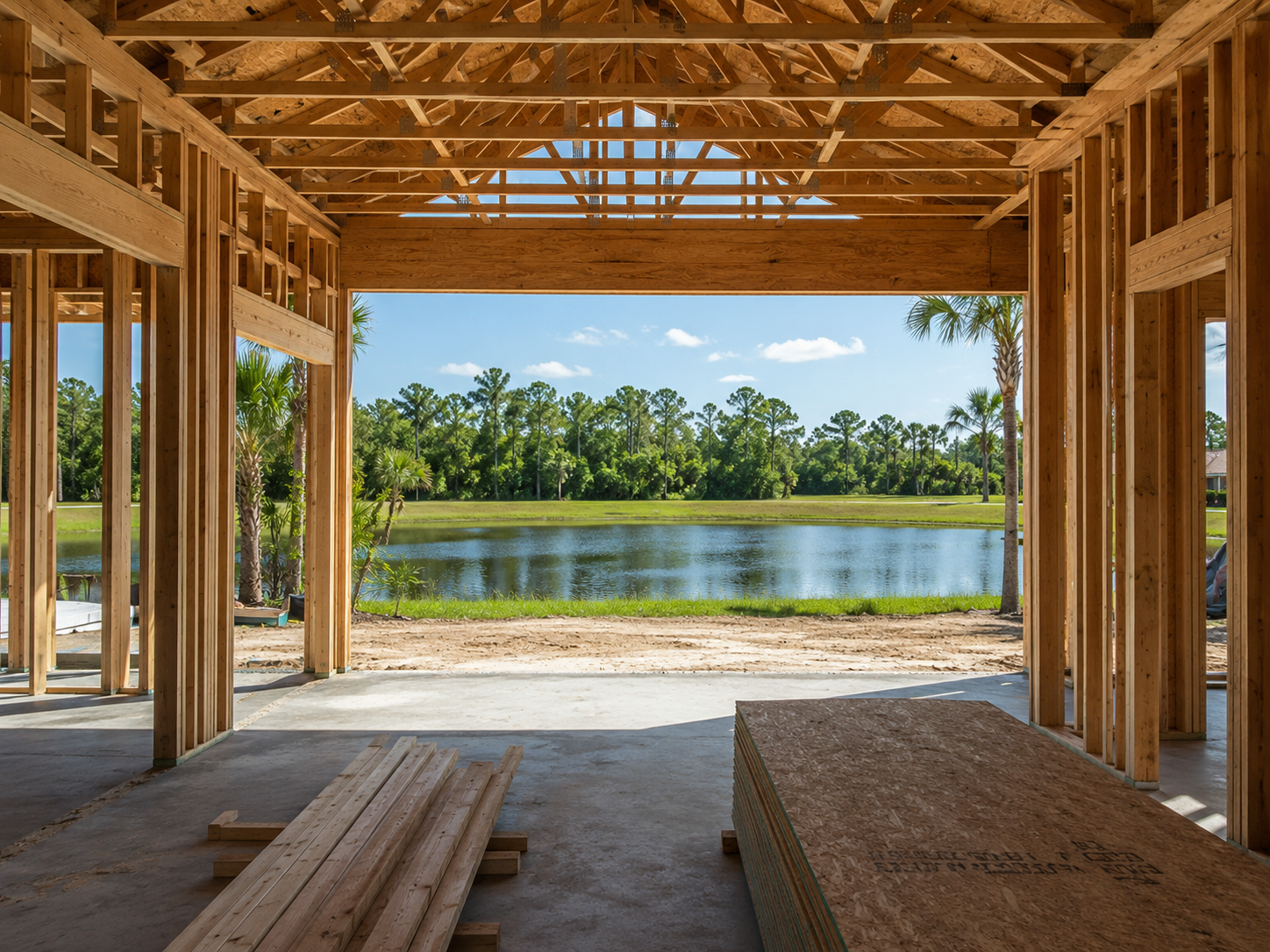
If you're building from the ground up and the builder permits it, one of the most useful opportunities can be a pre-drywall inspection.
This occurs after much of the framing and major mechanical work is installed but before drywall hides everything.
Think about what is visible at this stage:
Framing.
Roof structure.
Electrical wiring.
Plumbing lines.
HVAC components.
Window installation.
Structural connections.
Once the drywall goes up, a lot of that disappears.
That doesn't mean an inspector can guarantee what's behind every wall.
It means they get an opportunity to look before the walls become walls.
If your builder allows independent pre-drywall inspections, I'd seriously consider one.
Then inspect the completed house
The second major opportunity comes when construction is substantially complete and before closing.
Now we're looking at the finished product.
Your inspector may evaluate accessible components such as:
Roofing.
Attic.
Electrical system.
Plumbing.
HVAC.
Windows and doors.
Appliances.
Interior finishes.
Exterior.
Drainage.
Garage.
Visible structural components.
The exact scope depends on the inspector and inspection agreement.
This isn't about walking around with white gloves looking for a tiny paint drip.
We're trying to identify conditions that deserve attention before you take ownership.
Don't confuse the builder's walkthrough with your inspection
Most builders conduct some type of orientation or final walkthrough with the buyer.
That's useful.
It is not necessarily an independent home inspection.
The builder representative may show you:
How the thermostat works.
Where the water shutoff is.
How to operate appliances.
Warranty procedures.
Maintenance requirements.
They may also create a punch list of cosmetic items.
Great.
But the person explaining how to submit a warranty claim is not a substitute for the independent professional looking for reasons you may need to submit one.
Do both.
The blue-tape walkthrough has a purpose
This is where buyers tend to become professional drywall critics.
Tiny paint blemish?
Tape.
Cabinet scratch?
Tape.
Baseboard gap?
Tape.
And yes, cosmetic defects matter on a new house.
You're paying for a new product.
But don't spend two hours finding a quarter-inch paint imperfection while nobody has looked in the attic.
Prioritize.
I care considerably more about:
Water intrusion.
Roof issues.
HVAC operation.
Electrical problems.
Plumbing leaks.
Improper drainage.
Windows and doors that don't operate correctly.
Missing insulation.
Safety concerns.
Then we'll talk about the paint.
Inspect again before the warranty window closes
This is the step many buyers completely miss.
Florida law requires a builder warranty on qualifying newly constructed homes for certain construction defects involving equipment, materials or workmanship that result in a material violation of the Florida Building Code.
The statutory period is one year after the original conveyance of title to the initial owner or initial occupancy, whichever occurs first, subject to the statute's terms and exclusions.
A builder can provide an express written warranty instead if it meets or exceeds the statutory requirements.
So here's a strategy worth considering:
Have the house professionally inspected again around month 10 or 11.
Why?
Because you've lived in it.
You've used the showers.
You've run the air conditioner through a Florida summer.
You've experienced heavy rain.
You've opened the garage door 700 times.
You've discovered which outlets don't work and which door suddenly doesn't close correctly.
The house has had time to reveal itself.
That gives you an opportunity to identify issues and submit appropriate warranty requests before applicable warranty deadlines expire.
Keep a running warranty list
Don't rely on memory.
Create a file the day you close.
Keep:
-
Purchase contract
-
Builder warranty
-
Inspection reports
-
Punch lists
-
Repair confirmations
-
Permits
-
Product information
-
Appliance warranties
-
Photos
-
Emails with the builder
-
Warranty requests and responses
If something develops, document when you noticed it.
Take photos.
Submit warranty requests using the builder's required procedure.
And keep copies.
A text message to the superintendent saying, "Hey, the upstairs shower is still leaking," isn't the documentation system I'd choose for a six-figure investment.
Understand what "warranty" actually covers
This is another area where buyers can get overly comfortable.
A builder warranty doesn't mean:
Anything that happens to the house during the first year gets fixed for free.
Florida's statutory warranty has specific scope and exclusions.
Normal wear and tear isn't automatically a construction defect.
Normal settling within acceptable trade practices is excluded.
Damage caused by the homeowner's own work isn't the builder's responsibility.
Neither is every loss caused by weather or another outside event.
Appliances and equipment covered by separate manufacturer warranties can also fall outside the statutory builder-warranty provision.
Read the actual warranty you're receiving.
Preferably before closing.
A warranty is not a reason to accept known problems
This drives me crazy.
A buyer identifies something before closing.
Someone says:
"Don't worry. That's covered under warranty."
Why intentionally turn today's punch-list item into tomorrow's warranty claim?
If something can reasonably be corrected before closing, I'd rather have the discussion while the builder still owns the house.
After closing, your leverage changes.
You own it.
That doesn't mean legitimate warranty claims won't be addressed.
It means I'd rather close with the shortest unresolved list possible.
What if you discover a serious defect later?
Florida has a specific statutory process involving certain construction-defect disputes.
Chapter 558 of the Florida Statutes generally creates a notice-and-opportunity-to-repair process that must be followed before filing certain legal actions involving construction defects.
For an individual property claim covered by the statute, written notice generally must be provided at least 60 days before filing an action, describing the alleged defect in reasonable detail.
This is lawyer territory.
If a serious construction problem develops and normal warranty procedures aren't resolving it, don't rely on your neighbor, Facebook group or salesperson to interpret your legal rights.
Talk with a qualified Florida construction attorney.
Don't let the builder choose your entire team
The builder may have:
A preferred lender.
Preferred title company.
Preferred insurance provider.
Preferred inspector recommendation.
Preferred everything.
Some of those companies may be excellent.
But remember who your professionals work for.
Your real estate agent should represent your interests according to the brokerage relationship.
Your lender should explain the financing.
Your inspector should inspect the house independently.
Your attorney, when needed, should advise you.
Buying new construction isn't adversarial.
The builder wants to sell you a house.
You want to buy a good house.
Those goals can coexist perfectly well.
Independent advice simply makes sure everybody understands their role.
What this means for Florida buyers
This matters throughout Tampa Bay, Sarasota and especially the fast-growing new-construction corridors around Wesley Chapel, Riverview, Land O' Lakes, Parrish, Lakeland and Ocala.
Florida builders frequently compete using incentives.
Rate buydowns.
Closing-cost assistance.
Design upgrades.
Lot premiums.
Appliance packages.
Those can absolutely create value.
But I don't want buyers becoming so focused on negotiating $15,000 in incentives that they skip a few hundred dollars of independent due diligence on the house itself.
When comparing builders and communities, evaluate more than price.
Look at:
Builder reputation.
Warranty terms.
Inspection access.
HOA and CDD costs.
Insurance.
Taxes after completion.
Lot location.
Future construction around the property.
Community buildout.
And the actual quality of the home you're buying.
My new-construction inspection strategy
If the builder and construction schedule allow it:
-
Review the builder contract before signing.
-
Understand your inspection rights and deadlines.
-
Consider a pre-drywall inspection.
-
Have an independent final inspection before closing.
-
Complete the builder walkthrough and punch list.
-
Verify agreed repairs when possible.
-
Keep every warranty and construction document.
-
Document problems as they appear.
-
Consider another independent inspection around month 10 or 11.
-
Submit legitimate warranty claims before applicable deadlines.
That's not being difficult.
That's buying a house responsibly.
The bottom line
A new house can be beautiful.
It can also have mistakes.
Homes are built by human beings, using thousands of individual components installed by dozens of trades, often while several other houses are being built at the same time.
Things happen.
The goal isn't to find a perfect house.
The goal is to identify problems while they're still easier to address.
If you're considering new construction in Tampa Bay, Sarasota, Ocala or the surrounding Florida markets, contact me before you walk into the sales center and register yourself with the builder.
I'll help you compare communities, incentives, contracts, lots, financing and inspection opportunities so you're evaluating the whole deal, not just the model home and the monthly payment.
The builder has professionals protecting its side of the transaction.
You should too.