Published August 24, 2026
The Pool Looks Beautiful. Now Find Out What It Will Cost to Own.

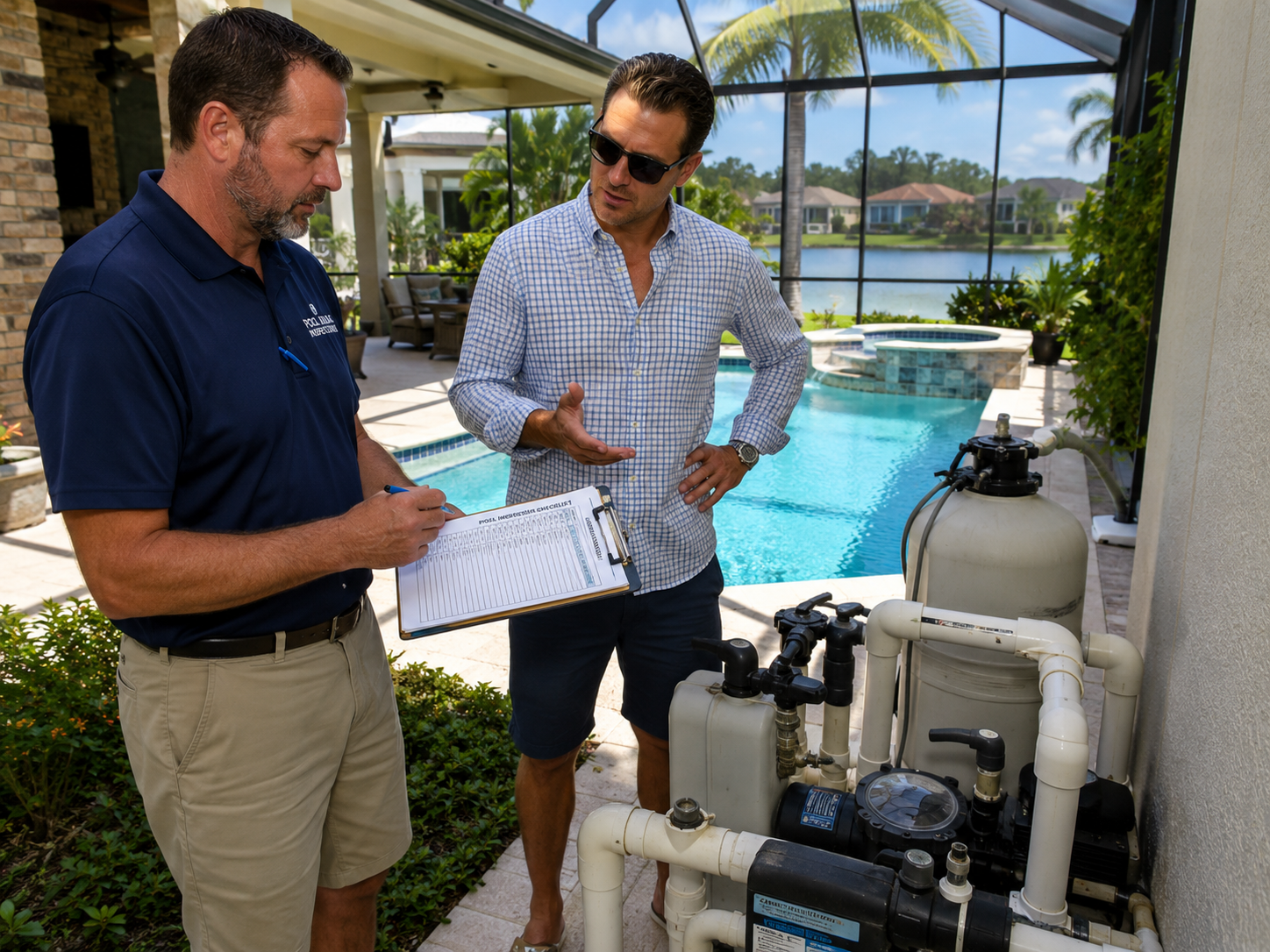
The Pool Looks Beautiful. Now Find Out What It Will Cost to Own.
A swimming pool can transform a Florida home into the place where everyone wants to gather. It can also conceal leaks, aging equipment, electrical concerns and deferred maintenance beneath perfectly blue water.
The color of the water is not a condition report.
Buyers should evaluate a pool as a collection of structural, mechanical, electrical and safety components. A pool inspection is especially important when the purchase involves a heater, spa, saltwater system, screen enclosure or extensive outdoor living area.
Before paying a premium for the backyard, determine what you are actually buying.
Order a Pool-Specific Inspection
A general home inspector may provide basic observations about the pool, but the scope can vary.
Consider hiring a qualified pool professional to evaluate:
- Pool shell and interior finish
- Tile and coping
- Deck and visible drainage
- Pump and filter
- Heater
- Saltwater generator or chlorination system
- Valves and plumbing
- Electrical equipment and bonding
- Lights
- Automation controls
- Spa components
- Water features
- Safety equipment
- Screen enclosure
- Signs of leakage
Ask whether the inspection includes testing the equipment through complete operating cycles. A pump turning on does not prove that the heater, automation and spa controls work correctly.
The pool should be evaluated while contractual inspection rights remain available. Discovering a nonfunctioning heater during the first cold weekend after closing is an expensive way to learn how optimistic the seller’s disclosure was.
Look Beyond the Surface Finish
Cracks deserve attention, but not every mark has the same meaning.
Some may be cosmetic. Others can indicate movement, water loss or deterioration. Staining, rough surfaces, loose tile and damaged coping may also point to age or chemical-balance problems.
Ask the inspector:
- Does the shell show movement or structural concern?
- Is the interior finish approaching replacement?
- Are cracks stable, cosmetic or active?
- Is tile missing or separating?
- Does the deck slope away from the pool?
- Is water collecting near the house?
- Are there signs of previous repairs?
- Is specialized structural evaluation recommended?
Do not rely on a verbal estimate of the pool’s age. Request installation records, renovation invoices, permits and warranties when available.
A freshly resurfaced pool with documentation is different from one that merely received aggressive cleaning before photography.
Investigate Possible Water Loss
Pools naturally lose some water through evaporation and normal use. Frequent refilling can signal a leak.
Look for:
- A seller routinely adding water
- Unusually low water levels
- Wet soil or persistent puddles
- Cracks around fittings
- Air entering the pump
- Equipment losing prime
- Mineral deposits around plumbing
- An automatic filler running constantly
- Previous leak-detection invoices
When a leak is suspected, obtain an appropriate evaluation instead of assuming the problem is minor.
A small leak can increase water and chemical use while contributing to deck, soil or equipment concerns. The repair may involve a simple fitting, underground plumbing or the pool structure. Those are dramatically different projects.
Price the Equipment, Not Just the Pool
Pool equipment has a service life and should be treated like the home’s air-conditioning system.
Record the manufacturer, model, age and condition of:
- Circulation pump
- Filter
- Heater or heat pump
- Saltwater generator
- Automation system
- Spa blower
- Lighting controls
- Water-feature pumps
- Automatic cleaner
- Chemical feeders
Ask how frequently the pool must run and what equipment remains with the property. Robotic cleaners, removable safety equipment and portable accessories should be identified in the contract when their inclusion matters.
Variable-speed pumps can provide greater control over circulation and energy use than older single-speed equipment. Actual savings depend on equipment, programming, utility rates and pool operation, so avoid accepting a generic savings claim without property-specific information.
Inspect the Screen Enclosure
A Florida pool cage can provide shade, reduce debris and make outdoor living more comfortable. It also requires maintenance and may represent a substantial future expense.
Evaluate:
- Torn or loose screening
- Corroded fasteners
- Damaged doors and latches
- Frame movement or distortion
- Connection points at the house
- Visible storm damage
- Gutter and drainage integration
- Condition of the concrete anchors
- Permit history for repairs or replacement
- Whether landscaping contacts the enclosure
Minor screen repairs are different from major structural or fastening work. Ask an appropriately qualified contractor to evaluate concerns beyond the inspector’s expertise.
Verify Permits and Contractor Records
Request available records for the original pool and later alterations.
Relevant work may include:
- Pool construction
- Screen enclosure
- Heater installation
- Electrical changes
- Gas service
- Deck expansion
- Spa addition
- Equipment relocation
- Structural repairs
Permit requirements depend on the work and local jurisdiction. Verify records with the applicable city or county rather than assuming a seller’s invoice proves final approval.
When repairs are needed, Florida’s Department of Business and Professional Regulation provides an online tool for verifying contractor licenses.
Review Safety Before Closing
Florida law contains safety requirements for residential swimming pools, including provisions addressing barriers, alarms, covers and other protective features. The requirements that apply can depend on the pool, property and construction history.
Florida’s statutory barrier standards include specifications concerning height, openings and separation from the water. The U.S. Consumer Product Safety Commission recommends layers of protection such as fencing with self-closing and self-latching gates, door alarms and qualifying safety covers.
Inspect:
- Fence and barrier condition
- Gate operation and latching
- Door and window alarms
- Pool covers
- Drain covers
- Rescue equipment
- Exterior lighting
- Deck traction
- Access from neighboring property
- Pet and child access points
Compliance with a minimum requirement should not be confused with a complete safety plan. Buyers should verify applicable legal and insurance requirements with qualified professionals.
Calculate the Complete Ownership Cost
Pool ownership costs more than chemicals.
Budget for:
- Electricity
- Water
- Routine cleaning
- Chemicals
- Equipment repairs
- Filter maintenance
- Heater operation
- Screen repairs
- Interior resurfacing
- Deck maintenance
- Leak detection
- Increased insurance exposure
- Safety improvements
- Eventual equipment replacement
Ask for available utility bills and pool-service invoices, but remember that the seller’s usage may differ from yours. Heating a pool regularly can create a different expense from operating it without heat.
A buyer planning to manage the pool personally should still budget for professional repairs and occasional water-quality problems. Pools tend to notice when their owners become overly confident.
Confirm Insurance Early
Provide the property details to a licensed insurance professional before inspection deadlines expire.
Ask whether the pool, spa, diving equipment, slide, screen enclosure, fence or other features affect coverage, eligibility or liability recommendations. Coverage and underwriting vary by insurer and property.
The existence of a pool does not automatically make a home difficult to insure, but inaccurate assumptions can create unpleasant closing delays.
Buy the Backyard With Open Eyes
A pool does not need to be new to be a good feature. It needs to be understood.
A properly evaluated pool can provide years of enjoyment and strengthen a home’s appeal. A neglected pool can become a repair project that happens to contain water.
If you are considering a pool home in Tampa Bay, St. Petersburg, Clearwater, Sarasota, Ocala, Wesley Chapel or another Florida community, contact Patrick Keating at It’s YOUR Move Property Group. Patrick can help you organize the inspections, documentation and ownership-cost questions that should be answered before the backyard sells you the house.